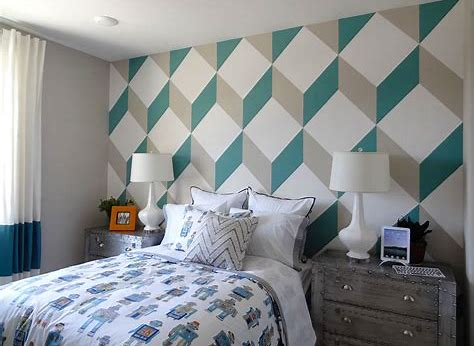
Paint colors can drastically affect the feeling of a room. It can make it enjoyable to be in, or leave you feeling uncomfortable. It can alter the perception of the room’s shape and size and add to, or take away from, the atmosphere you’re trying to portray in your space. The paint you use in your house can make or break its aesthetics.
COLOR TIPS
Dark Colors:
+ Adds coziness to a room.
+ Used to make a large room feel smaller.
+ Advances the color in the room.
Light Colors:
+ Used to make small rooms feel bigger.
+ Recedes the color in a room.
+ Light colors help a space feel more airy.
Lighter colors tend to recede, which makes it appear farther away, therefore making the room feel bigger. Darker colors tend to advance, which makes them seem closer, in turn making the room feel smaller. You can use colors to completely modify the size of a room by perception. You can use this concept to minimize unattractive features in your house or highlight focal points.
If your room is too large and doesn’t make the space feel cozy, you can paint your ceiling a darker color than the walls, to help them feel a little lower. Conversely, if your ceilings are too low and makes you feel claustrophobic, you can paint them a lighter shade to help them feel higher.
Purchasing:
– Buy a quart first instead of a large quantity in case you’re not committed to the color. Paint a piece of foam board and move it around the room to see how the light affects the color at different times of the day.
– Know the square footage of the room you are painting before you head to the store. The pros recommend one gallon for every 400 square feet. Covering textured, rough or unprimed surfaces may require more.
– Don’t apply latex on an oil finish and vice versa without first sanding the walls (remember to wear a mask) and wiping away the dust particles with a tack cloth. Apply a primer of the same composition (oil or latex) of the intended topcoat. To tell whether your current wall color is water- or oil-based, douse a white cloth with rubbing alcohol and rub it on the wall (in an out-of-the-way spot). If the paint softens and begins to transfer onto the cloth, it is water based. If the alcohol does not remove any color, it is oil-based.
– Don’t underestimate how long it’ll take you to get the job done. Allow at least 24 hours to dry before bringing everything back into the room. Allow two weeks to 30 days to cure before washing or wiping.
– Paints have volatile organic chemicals (VOCs ) that can release toxic gas into the air for years after a room has been painted. Buy eco-friendly paint with low-VOCs or zero-VOCs.-Paints with a green seal have a VOC of less than 50 grams/liter for flat and less than 150 grams/liter of non-flat.
Prep:
– Paint doesn’t stick very well to dirty walls, so clean them with soap and water (or TSP) and rinse with water once done. Let dry overnight.
– Clean ceilings before painting. There will be cobwebs and dust that you just don’t see. Use an old paintbrush or china bristle brush to dust baseboards, trim and crown molding before taping them off (use painter’s tape with paper attached to protect the baseboards). Overlap the tape seams by at least an inch to avoid seepage between pieces, and then seal the tape to the surface with your fingers or a rag.
– Don’t cover the floors with plastic as it can be very slippery. Use drop cloths or old sheets to protect them from splatters and drips.
– The color mixer at the paint store can create slight variations from can to can. The last thing you want is to have two shades of a color on the same wall. This can be remedied by mixing all of the paint cans together before you start painting to ensure you will have consistent color throughout the room.
– Fill holes with spackle using a five-in-one tool or wide blade and caulk where necessary. Sand dry spackle smooth, and prime each spot.
– Don’t underestimate how long it’ll take you to get the job done. Allow at least 24 hours to dry before bringing everything back into the room. Allow two weeks to 30 days to cure before washing or wiping.
– Removing outlet covers makes for a much neater paint job. Tape the screws to the cover, and tape over the outlet or light switch to keep paint from getting on them.
Painting Ceilings:
– Scaffolding comes in parts called “bucks” and “cross bucks”. For a high ceiling, four bucks should suffice. Each buck costs about $12 a day to rent. You’ll also need: walk boards or planks to place along the bucks, these rent for about $10 each per day. -Wheels rent separately for scaffolding. They are important because they allow you to move the scaffolding with ease. Four wheels rent for about $25 a day.
– When painting a textured ceiling, be sure to use a thick-nap roller to ensure that you get full coverage over the bumps and irregularities in the textured surface. For a smooth drywall ceiling, you can use a roller with a smooth or shorter nap.